

Mercy Corps Ventures and CCI:
Documenting the Real-World Impacts of Web3 in Emerging Markets


The Mercy Corps Ventures and Crypto Council for Innovation Partnership
Understanding the real-world impacts of emerging technology is critical to ensure that the benefits of these technologies are evenly distributed and that responsible policy and industry practices can be formed. Mercy Corps Ventures’ Crypto for Good Fund and the Crypto Council for Innovation have partnered to create evidence-based reports on a series of Web3 pilot projects in emerging economies.
Mercy Corps Ventures has invested $2+ million in seed funding to Web3 pilot projects that address the climate disaster. Its investments focus on projects utilizing Web3 technologies to enhance vital areas such as resource coordination, insurance, and financial services in regions susceptible to climate adversities. The goal is to not only counteract the effects of climate change but also to foster sustainable development and improve the economic conditions of these communities. By integrating blockchain technology, these initiatives can achieve greater transparency, reduce corruption and inefficiency, and provide more direct support to those in need.
The Crypto Council for Innovation has partnered with Mercy Corps Ventures to document a series of pilot projects, using its global research perspective to examine the real-world impacts and implications for scaling such solutions. These pilots focus on new Web3 tools that help to build climate resilience for the 3.3B people around the world whose daily lives are vulnerable to climate change. The reports showcase the pilots’ impact after deployment and seek to understand the economic, social, and environmental effects at the individual and community level.

Read the Reports
-

Stablecoin Cross-Border Payments: Boosting Micro-Merchant Incomes in Cameroon
MSMEs are the lifeblood of Africa’s economic development. Micro, Small, and Medium Enterprises (MSMEs) contribute over 50% of GDP and employ around 60% of the workforce across the continent, serving as a critical engine of innovation, income earning potential, and poverty reduction. The continent is increasingly integrated into global supply chains. African MSMEs are increasingly engaging in cross-border trade, where Asia accounts for over 40% of both Africa’s exports and imports. However, the majority of African MSMEs operate in the informal sector, without formal registration and access to traditional banking systems — and often forced into informal channels where the majority of transactions occur and enterprises are charged exorbitant fees (as high as 20%).
Mercy Corps Ventures partnered with REasy to launch a pilot providing Cameroonian micro-businesses with secure, efficient, and affordable payment options, to reduce their reliance on informal channels that impose exorbitant fees and allow them to allocate more resources to their core operations.
913 micro-merchants were onboarded to the REasy platform during the pilot period, of which 27% were women. Through the pilot, merchants could top up their accounts locally using mobile money, bank transfers, or cash, and then send stablecoin-powered payments that were settled almost instantly to suppliers via familiar platforms like Alipay and WeChat Pay.
A total of over €4.3M (~$5.1M USD) in transactions were sent via the REasy platform over during the pilot period. The pilot was operational over a period of 6 months. During this period, a total of $738,000 in transaction costs were saved by merchants, with an average total savings of $810 per merchant per week ($16,200 per merchant over the pilot duration).
-
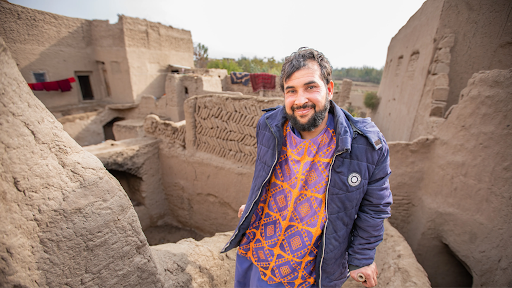
Stablecoin Aid Payments to Strengthen Agricultural Livelihoods in Easter Afghanistan
Afghanistan’s humanitarian crisis is critically underfunded. Since 1999, Afghanistan’s formal financial infrastructure has eroded in response to continuous sanctions and counter-terrorism financing regulations. Equitable digital access is also under threat, with increasingly fewer women able to access the internet. In this context, humanitarian actors struggle to deliver financial aid due to the lack of formal banking infrastructure, operational difficulty, and limited funding availability — and have become reliant on cash shipments and informal money transfer agents (IMTAs) that can create security risks, compliance challenges, and additional fees. While digital cash assistance has long been a goal for humanitarian organizations operating locally, many remote regions remain excluded from digital financial services due to limited connectivity and liquidity.
Mercy Corps and Mercy Corps Ventures, in partnership with HesabPay and its local partner Community Driven Development Organization (CDDO), launched a pilot using stablecoin rails to send aid payments to participating families in rural areas with low connectivity, allowing them to benefit from faster, safer access to support to support their livelihoods.HesabPay leverages stablecoin technology to deliver faster, safer, and more cost-effective financial transactions to impacted communities in regions where formal banking infrastructure is not available, and transfer costs and security risks are high – such as Zurmat district of the Paktia province in Eastern Afghanistan. The pilot achieved a 29% reduction in overall delivery costs and a 10-hour reduction in payment time compared to traditional informal money transfer agents, delivering more aid per dollar in a safer and faster way. Stablecoin rails provided 100% transaction traceability, eliminating intermediaries and reducing counterparty risks. 98% of participants preferred stablecoin payments over cash in future programming, demonstrating the viability of blockchain-based payment systems even in offline, low-connectivity environments.
See our case study brief HERE.
-
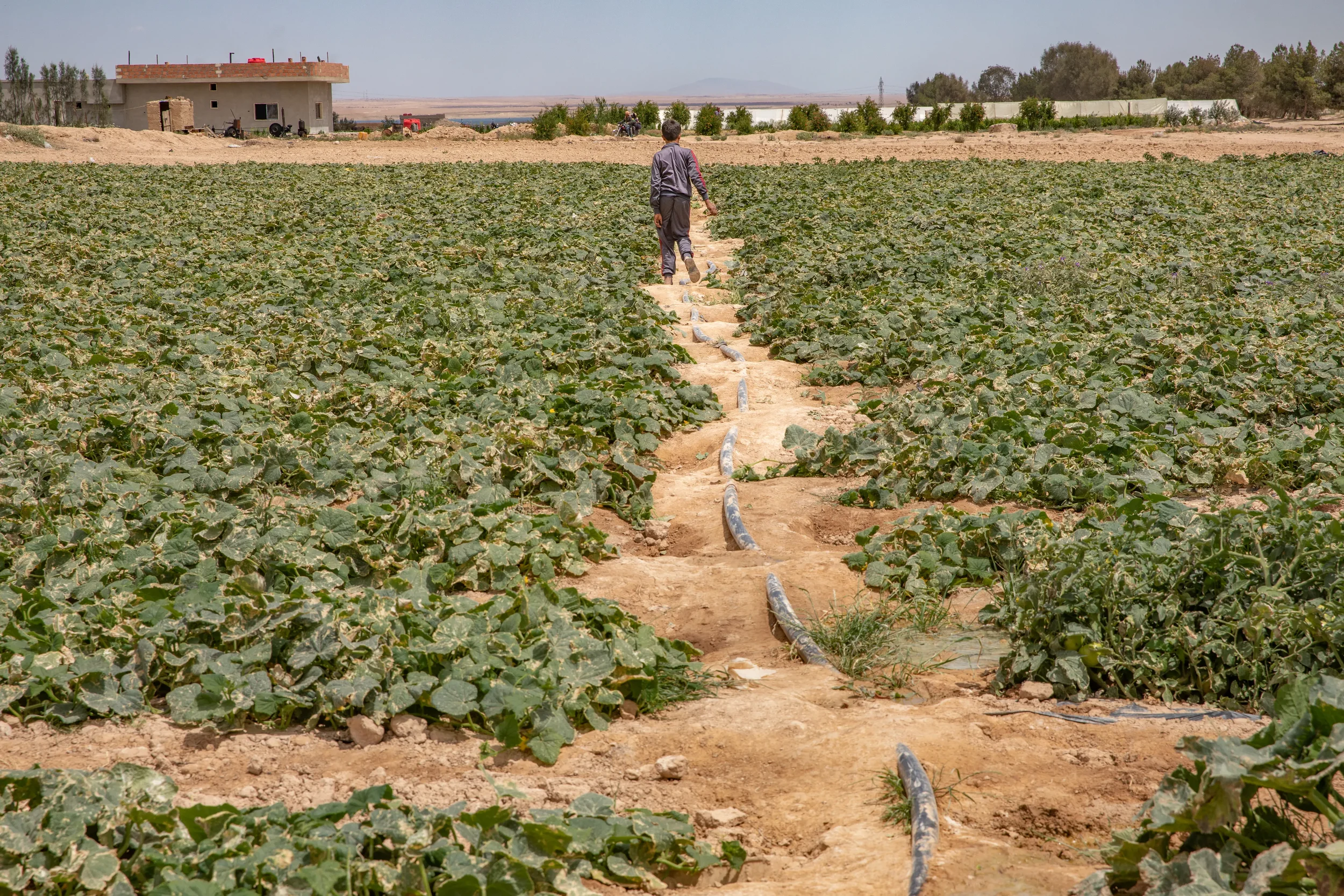
Strengthening Agricultural Livelihoods in Syria with Stablecoin Payments
Since 2011, Syria has been embroiled in a civil war, which has resulted in the deterioration of formal banking rails as international financial institutions have de-risked. In this context, humanitarian actors permissioned to operate in the country struggle to deliver financial aid due to the lack of formal banking infrastructure, currency devaluation, and high transfer costs. Humanitarian organizations have become reliant on informal money transfer agents (IMTAs or Hawalas) which creates security risks, compliance challenges, and additional fees, further reducing the efficiency of aid delivery.
Mercy Corps and Mercy Corps Ventures, in partnership with HesabPay and its local partner Pioneers Innovation, launched a pilot using stablecoin rails to send aid payments to participating farmers and agribusinesses, allowing them to benefit from faster, safer access to support for their livelihoods.
HesabPay leverages stablecoin technology to deliver faster, safer, and more cost-effective financial transactions to impacted communities in regions where formal banking infrastructure is not available, and transfer costs and security risks are high – such as Northeast Syria. The initiative achieved a 96% drop in payment time (from average of 28 days to less than 1 day) and a 60% cost reduction compared to traditional informal money transfer agents, delivering more aid per dollar in a safer and faster way, directly to participants’ phones. Stablecoin rails provided 100% transaction traceability, eliminating all intermediaries and reducing counterparty risks. With 72% of participants preferring stablecoin payments over cash in future programming, the pilot demonstrates the viability of blockchain-based payment systems.
See our case study brief HERE. -

Anticipatory Climate Insurance for Kenyan Pastoralists
In rural Kenya, an anticipatory climate insurance pilot powered by DIVA Donate pilot made a substantial impact on pastoralist communities in two counties, who depend heavily on livestock for their livelihood and are highly vulnerable to climate variations. As drought has plagued the region over the past few years and become more predictable, aid has often lagged behind need. In some cases aid was delivered months after the worst impacts of drought have already been experienced.
The initiative, a partnership between DIVA Technologies, Fortune Credit, and Shamba Network, aimed to automatically trigger anticipatory cash payments to impacted populations once the conditions for drought are sensed – and critically, allow pastoralists to prepare for drought and save their livestock with the timely support received.
Using crypto rails to facilitate payments to pastoralists’ M-Pesa accounts, the project used smart contracts triggered by widely used satellite sensor ecological data to facilitate donation-based cash transfers to pastoralists impacted by the dry season. By leveraging blockchain technology, DIVA Donate dramatically improved the efficiency of financial aid delivery, reducing donation transaction costs by 75% and the time it takes to process payments by 90%. This quick and cost-effective method allowed 262 participating pastoralists to receive funds promptly before the onset of the dry season's harsh effects.
-

Atlantis DAO Water System Management in Rural India
The Atlantis DAO project deployed a pilot project in rural India that developed a decentralized peer-to-peer water network. This network is designed to serve underserved communities, providing them with consistent access to clean water. The technology underpinning this project used a blockchain-based token system to incentivize and compensate community members for their participation in water collection, testing, and distribution.
The pilot also introduced a mobile app that was gamified to engage users effectively. The app's interface and functionality were designed to feel familiar to rural smartphone users, simplifying the complexities involved in managing water resources through traditional means. As the report finds, over an 11-month period, this pilot engaged 3,859 individuals and served a population of approximately 45,000. Through on the ground interviews and online surveys, users of the app reported that Atlantis DAO initiative not only improved water conditions but also stimulated local economies.
Atlantis DAO has created over 440 new informal jobs, 30% of which were held by women, promoting gender equality in employment within the community.